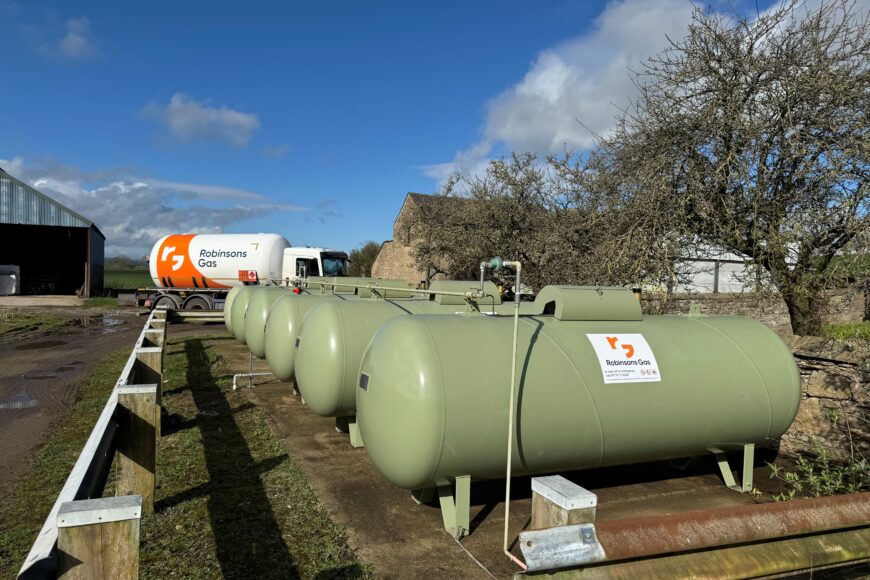
Whether you’re planning to install a new bulk LPG storage tank or relocate an existing one, deciding where to position it isn’t something that can be left to guesswork. Bulk LPG tanks cannot simply be placed wherever is most convenient. There are clearly defined siting requirements that must be adhered to, all of which are designed to ensure the safety of your property, its occupants, and the surrounding environment. These requirements take into account factors such as separation distances from buildings and boundaries, safe access for deliveries, emergency services accessibility, as well as factors such as ground conditions and ventilation.
In most cases, your bulk LPG tank will be owned and maintained by your LPG supplier, who will ensure that the installation complies with all relevant safety standards and regulatory requirements. However, it remains important for property owners, facilities managers and site operators to have a clear understanding of these siting principles. This knowledge supports effective planning, helps avoid unnecessary delays or additional costs, and ensures a smooth installation or relocation process.
At Robinsons Gas, we support a wide range of sectors with their LPG requirements, including residential homes, agriculture, commercial premises, industrial operations, hospitality, leisure facilities, and holiday parks. Each sector presents its own unique challenges when it comes to tank siting, from space constraints in domestic settings to higher usage demands and operational considerations in commercial and industrial environments.
In this blog we’re going to look at the types of bulk gas tanks available, from above-ground tanks to underground installations, and outline the key considerations that go into choosing the most appropriate location. Whether you’re working with limited space, planning for future expansion, or simply want to make sure everything is compliant from day one, we’ll help you understand what’s required and why it matters.
Types and sizes of bulk LPG tanks
Bulk LPG tanks are available in a range of types and capacities to suit different needs, whether installed above ground or below ground, and are typically measured in litres or tonnes. Smaller tanks, starting at around 450 litres (0.25 tonnes) are generally limited in use but can serve very low-demand applications. For most residential properties, the most common choice is a 1,410-litre tank (0.6 tonnes), while a larger 2,200-litre tank (1 tonne)) may be more suitable for homes with higher energy requirements.
For commercial, industrial or agricultural sites with higher consumption, larger options are available, including 3,900-litre (1.75 tonnes) and 4,600-litre (2 tonnes) tanks. Where even greater storage is required, multiple tanks can be made safely connected to create an integrated system. This flexibility ensures that no matter the scale of usage, there’s a bulk LPG solution to meet operational demands while remaining fully compliant with safety regulations.
Aesthetics and available space often influence the choice of tank. Many property owners view LPG tanks as an eyesore, especially in residential settings, but space constraints and site layout can play a bigger role in determining the best options. No two properties are the same and understanding the differences between above-ground and underground tanks can help make the right decision.
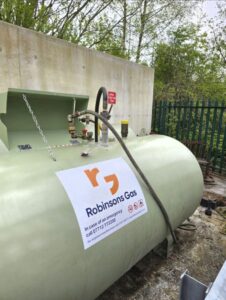
Above-ground bulk LPG tanks
These are the most common choice across domestic, commercial, agricultural and industrial sites due to their straightforward installation, ease of access, and flexibility. Mounted on a stable concrete plinth or reinforced base, these tanks need to be level and in a well-drained location. Above-ground installations allow for easy inspection, maintenance, and refilling, making them particularly suitable for high-usage sites or locations that require regular access.
While visible, careful siting, landscaping, or barriers can reduce their visual impact while ensuring compliance with safety regulations. Key considerations include accessibility for deliveries, separation distances from buildings or boundaries, and exposure to environmental elements.
Underground bulk LPG tanks
These tanks are installed below ground level, with only a small tank lid visible above the surface. This makes them ideal where space is limited, or where aesthetics are a priority, such as residential properties, hospitality venues, or landscaped commercial sites.
Constructed from robust, corrosion-resistant materials, underground tanks are installed in a prepared excavation, often on a reinforced concrete base and surrounded by sand or other suitable material to ensure stability and safety. Proper drainage and ventilation around the tank lid are essential to prevent water accumulation and ensure safe operation.
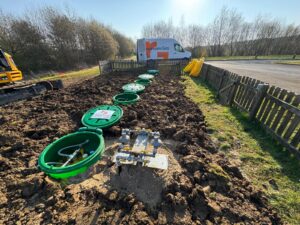
While installation requires more upfront planning than above-ground tanks, underground tanks offer long-term advantages, including minimal visual impact, protection from external damage, and compliance with the same regulatory standards as above-ground tanks.
Comparing options
Accessibility: Above-ground tanks offer easier access for deliveries, inspection and maintenance. Underground tanks remain largely out of sight
Aesthetics: Underground tanks are discreet and preserve visual appeal, while above-ground tanks may require landscaping or barriers to reduce their presence
Installation: Above-ground tanks are simpler and quicker to install. Underground tanks need excavation and additional site preparation
Protection: Underground tanks are naturally shielded from environmental elements and accidental damage, whereas above-ground tanks are more exposed but easier to monitor.
Ultimately, the choice between above-ground and underground tanks will depend on your home or site’s layout, usage requirements, and aesthetic considerations. At Robinsons Gas, our experienced customer service team and in-house Gas Safe engineering team are here to guide you through these decisions to ensure that every bulk LPG installation is safe, compliant, and tailored to your specific needs.
Once you’ve chosen the right type and size of tank, it’s essential to ensure its installation fully complies with safety regulations.
Regulations for Bulk LPG tanks
Safety is the top priority when it comes to bulk LPG storage. Strict regulations govern every aspect of tank installation, siting, and maintenance. These rules are designed to protect property, people, and the environment. At Robinsons Gas, we ensure that all installations meet or exceed the required standards, giving our customers complete peace of mind.
Tank siting: There must be a minimum distance (often referred to as the separation distance) between the bulk LPG tank and any building, boundary line or source of ignition. When considering making any alterations to your property or premises, whether its erecting sheds or putting up fences, altering walls, or installing electric equipment nearby, these distances must be respected. As gas is heavier than air, there must not be any drains or gullies near the tank as leaks could accumulate in pockets of gas and pose a fire or explosion risk.
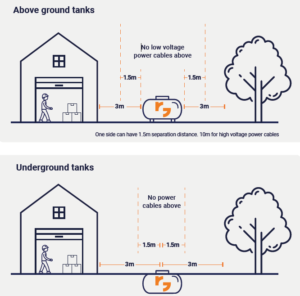
Ventilation and ground conditions: Proper airflow around above-ground tanks and adequate drainage for underground tanks are essential. The area surrounding the tank must be keep free of debris, particularly combustible material. Tanks must be installed on stable, load-bearing surfaces suitable for their weight and contents
Delivery and maintenance access: Deliveries require clear access and your driver must have a clear line of sight from the wagon to the LPG tank, with a dedicated flat parking area for the tanker. In addition, as bulk LPG tanks are subject to regular inspections, pressure testing, and maintenance, it’s important the surrounding area is kept clear of obstructions, debris, or vegetation so your driver or Gas Safe engineer can access the tank at all times
Security and impact protection: Naked flames, smoking, and the use of electrical equipment near tanks must be avoided. Larger tanks of 4 tonnes or more may require a security fence, and crash barriers or bollards should be installed to protect tanks from vehicle impact
Emergency arrangements: All tanks must display the supplier’s emergency contact number. A clear emergency plan should be in place to evacuate people safely in the event of a leak or fire
Adhering to these regulations is not just about legal compliance, it safeguards everyone on your property and ensures uninterrupted gas supply.
Common mistakes to avoid
Even with the best planning, mistakes can happen that compromise safety or compliance. To help you avoid common pitfalls, keep these points in mind:
- Siting too close to buildings, boundaries, or drains
- Installing fences, sheds or other structures too near the tank
- Blocking access for LPG deliveries, inspection, or maintenance
- Overlooking ventilation and drainage requirements
- Removing or obscuring tank stickers containing emergency and supplier information
At Robinsons Gas, we guide you through every step, from selecting the right tank and site location to ensuring ongoing maintenance and regulatory compliance.
Whether you’re installing a new bulk LPG tank or relocating an existing one, Robinsons Gas is here to make the process safe, simple, and fully compliant. Get in touch with our expert team today to discuss your requirements, get guidance on the right tank for your property, and schedule a Gas Safe installation you can trust.
Get in touch on 01347 238177 or contact us.