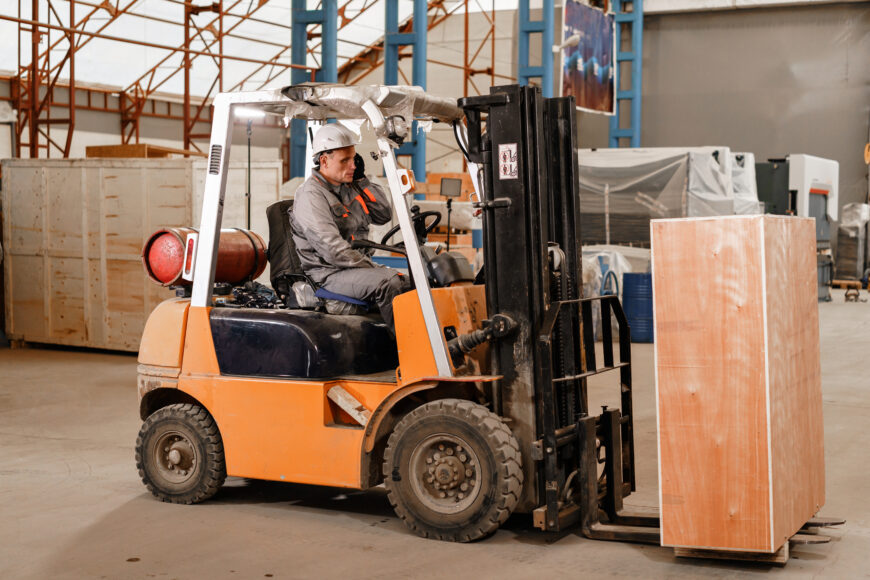
If your forklift trucks, stacker, or counter-balance trucks already run on LPG (liquified petroleum gas), you’ll know the power, reliability, and cost savings it brings. Maybe your golf club’s buggies and mowers are already LPG-fuelled workhorses. Or perhaps you’re still running diesel or electric fleets but wondering if it’s time to make the switch. Either way, LPG might just be the perfect fit for your business.
No matter your starting point, one thing is clear: choosing the right forklift fuel type is one of the most important operational decisions you can make. The right choice impacts your day-to-day productivity, your running costs, and even your environmental credentials.
Whether you operate in warehousing and distribution, construction, manufacturing, agriculture, or any other sector, LPG, diesel, and electric forklifts are the three main contenders. Each has its own strengths, but when you look at performance, flexibility, uptime, and the total cost of ownership, LPG consistently delivers advantages that many operations can’t afford to overlook.
It’s essential to evaluate which is the best fit for your business needs, as your decision will also impact running costs and environmental performance.
At Robinsons Gas, we’ve worked with forklift users across a wide range of industries for many years, and we’ve seen first hand how the right choice can transform efficiency and reliability. So, here we’ll break down the options, and look at the pros and cons – with a particular focus on why LPG stands out as the most balanced choice for many businesses.
LPG forklifts – the best of both worlds
There are many reasons why forward-thinking businesses choose commercial LPG to fuel their forklifts.
Known for their exceptional flexibility, LPG forklifts perform just as effectively on the warehouse floor as they do outdoors in a yard. They combine the power and endurance you’d expect from diesel models, while offering the cleaner, quieter operation that comes close to electric, giving you a genuine best-of-both-worlds solution.
Downtime is virtually non-existent. Refuelling is quick and efficient – simply swap or refill a cylinder in just a few minutes and you’re back in action. That means no long charging cycles which you get with electric, and no lengthy waiting in between shifts. Performance remains consistent too, delivering full power even when your LPG storage tank is low and maintaining output no matter what the workload.
On top of that, on an environmental perspective, LPG burns far cleaner than diesel, producing fewer harmful emissions and significantly reducing harmful air pollutants – particularly important in an indoor environment where air quality is critical for worker safety and compliance with health regulations. Choosing LPG can help you meet stricter environmental standards while protecting your team’s well-being.
The benefits don’t stop there. LPG truck maintenance costs are typically lower than with diesel-powered trucks, because the cleaner-burning fuel causes less wear and tear on engine components. Over time that translates into meaningful savings on servicing and repairs.
Noise reduction is another win for LPG. According to Liquid Gas UK, the Trade Association for the LPG industry in the UK, LPG trucks are up to 10 decibels quieter than their diesel equivalents, creating a more comfortable, less noisy working environment for your team.
With power, efficiency, and cleaner operation, it’s no wonder LPG is the go-to choice for so many businesses looking to optimise performance and sustainability.
Diesel Forklifts – Power, but with trade-offs
Diesel forklifts are strong performers in outdoor and heavy-load environments – they’ve long been known for their high torque, making them well-suited for handling oversized or exceptionally heavy loads. They can also run for extended periods before needing a refuel – an advantage for continuous-use operations
However, these advantages come with clear draw-backs. Diesel engines produce higher levels of emissions, making them unsuitable for indoor use, and less appealing for businesses with sustainability targets. Diesel is less clean-burning than LPG, and can contribute to higher particulate levels in the air – a concern not just for environmental impact but also workers’ health.
Whilst they are robust and durable, diesel forklifts tend to have higher maintenance costs. The engine systems are more complex and the harsh combustion process can lead to more frequent repairs.
For operations limited to outdoor, rugged environments, diesel can be a strong choice. But for businesses working across both indoor and outdoor environments – or those concerned about air quality and operating costs – LPG provides a far more versatile and efficient solution.
Electric Forklifts – clean but with operational constraints
Electric forklifts offer zero on-site emissions and very low noise levels, making them well-suited for enclosed environments and businesses focused on sustainability targets. Their low noise level can improve workplace comfort.
However, there are operational limitations to consider that can impact productivity. Batteries require several hours to recharge, not minutes, which can lead to trucks being out of action for long periods unless you invest in costly spare batteries and charging infrastructure.
The higher upfront purchase price of electric forklift trucks can also be a barrier for some businesses, and whilst electric models perform well indoors, they are less effective in continuous outdoor use, particularly in harsh weather conditions.
For predictable, indoor-only operations, electric forklifts can work well. But for companies that need both indoor and outdoor capability, quick refuelling, and consistent performance throughout the day, LPG offers a more flexible and cost-effective solution.
Why LPG forklifts stand out
When you weigh the factors up – performance, flexibility, uptime, cost, emissions and ease of refuelling – LPG forklifts emerge as the most versatile option for the widest range of operations:
- Cost-effective – competitive running costs and lower maintenance expenses
- Minimal downtime – refuel in minutes so minimum downtime
- Versatile – operate effectively both inside and out
- Quiet – improved working conditions for your team
- Environmentally balanced – lower emissions than diesel without sacrificing power
- Future-ready – renewable gases are on the horizon, offering greater sustainability.
Fuel your business with Robinsons Gas
At Robinsons Gas, we know that having the right forklift is only half the story – you also need a reliable and uninterrupted fuel supply to keep your operations running. That’s why we make switching to us simple, seamless, and completely hassle-free.
We provide safe, reliable and flexible LPG supply solutions tailored to your operation. Our state-of-the-art telemetry system provides a live feed of your gas level, and our automatic refilling service triggers deliveries when you need them. Which means you never have to worry about running low on fuel – no fuss, no downtime. Just steady, uninterrupted power for your fleet.
Talk to our friendly, experienced team to find out how we can make your fleet more efficient, and to arrange a no-obligation site visit.
Get in touch today on 01347 238177
Or contact us.