At Robinsons Gas, we know that gas safety is about more than simply ‘ticking the compliance box’. For thousands of UK off-grid businesses, from hotels and restaurants to farms, factories, care homes, and holiday parks, LPG is the lifeblood that keeps operations running. It cooks, it heats, it powers processes, and it keeps customers and staff comfortable all year round.
LPG is the smart choice: it’s reliable, versatile, efficient, and produces fewer carbon emissions than many other off-grid fuels. But, while it’s a trusted energy source, it’s only as safe as the people and systems managing it. That’s why we’re proud to be supporting Gas Safety Week 2025 – a national campaign that raises awareness of gas safety standards and reminds us all that prevention and preparation are key to keeping people safe.
Why workplace LPG safety matters
Unlike a domestic supply, workplace commercial gas systems are often larger, busier, and exposed to more wear and tear. A bulk LPG storage tank might serve kitchens running at full tilt, industrial equipment working around the clock, or agricultural processes that simply can’t stop.
In these environments, even minor issues can escalate quickly. The good news? LPG is very safe when stored and used correctly, and incidents are rare. But by building good habits – and making sure everyone on site knows what to look for – businesses can prevent problems before they start and respond effectively if something does go wrong.
Best practices: Preventing LPG leaks in the workplace
Your bulk LPG storage tank(s) is owned and maintained by your supplier, and it comes equipped with built-in safety devices such as the UPSO/OPSO shut-off system, which automatically cuts off gas supply if pressure issues arise. But day-to-day vigilance can make all the difference.
Here are some proactive steps your business can take:
Know your tank equipment
- Know your tank and pipework layout
- Identify your Emergency Control Valve (ECV) and know how to shut it off
- Ensure all relevant staff know how and when to shut off the supply.
Carry out regular visual checks
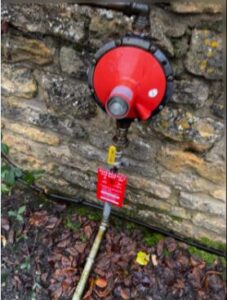
- Inspect your tank for dents, corrosion, frost, or signs of damage
- Check pipework and valves for wear and tear
- Keep the area around the tank clear of clutter, combustible materials, and vegetation. Ventilation is vital.
Install safety enhancements
- Consider LPG gas detectors for early leak detection, especially in enclosed spaces. These can provide an early warning system that gives you peace of mind
- Keep safety signage and the tank’s safety sticker clean and visible at all times – it contains vital emergency information.
Recognising the warning signs of a leak
When it comes to LPG safety, speed is everything. The earlier a potential leak is spotted, the easier it is to prevent it from turning into a serious incident. That’s why it’s vital your team knows what to look out for – and even smell or listen for. A few simple checks can make all the difference.
Here are the key warning signs every member of staff should be trained to recognise:
Smell: LPG is naturally odourless, but for safety, a strong-smelling additive is included. If you or your staff notice an unusual, pungent smell, often compared to rotten eggs or cabbage, this could be the first and most obvious indicator that gas is escaping. Never ignore it, even if it seems faint.
Explore what to do if you smell gas.
Sound: Pay attention to unexpected noises around your tank, valves, or pipework. A continuous hissing sound can suggest gas is leaking under pressure. Even if it’s subtle, it should be treated as a red flag.
Sight: Leaks aren’t always invisible. Watch out for frost or icing forming on fittings, valves, or pipework – this can happen when escaping LPG rapidly cools the surrounding area. Another visual clue is patches of unexplained dead vegetation near your tank. Plants don’t lie – if the grass around the tank looks suspiciously scorched or dead, it could point to a slow, hidden leak.
Symptoms: Sometimes the signs show up in people, not the equipment. Staff working nearby may suddenly feel dizzy, light-headed, nauseous, or develop headaches. These symptoms should never be brushed off as ‘just a bug going round’. If they improve after moving into fresh air, that’s a strong sign that gas exposure could be the cause.
If any of these warning signs appear, take action immediately. Don’t wait to ‘see if it clears up’ – gas safety isn’t something to gamble with. Prompt recognition and swift response can protect your people, your site, and your business.
What to do in the event of an LPG emergency
Even with the best precautions in place, accidents can still happen, and knowing how to respond is just as important as prevention.
If your workplace suspects an LPG leak, the golden rule is simple: stay calm, act quickly, and prioritise safety. Panic can make a situation worse, but a clear head and a step-by-step response can keep people and property protected.
Here’s what you need to do:
Turn off the gas at the ECV or tank valve if safe to do so. Shut down all gas appliances and do not operate electrical switches.
Extinguish all open flames – no smoking, no naked lights. Ventilate the area to allow the gas to disperse by opening windows and doors, and evacuate staff and visitors to a safe assembly point, ideally upwind of the suspected leak. Also, keep vehicles, machinery, and mobile equipment well clear of the area.
Get in touch with Robinsons Gas immediately for guidance and support on 01347 238177. If there is a fire, dial 999 and ask for the Fire Brigade. Clearly inform them that a bulk LPG storage tank is on site. This information is critical to how they manage the incident safely.
Important: NEVER attempt DIY repairs under any circumstances. Repairing a leak requires specialist knowledge, tools, and training. Only a Gas Safe registered engineer should investigate, diagnose and resolve the issue, and confirm when it’s safe to resume operations.
By training staff on this procedure, and rehearsing it as part of your emergency planning, you’ll ensure that everyone knows exactly what to do in the rare event of an LPG emergency. The goal is always the same: protect people first, then let professionals take care of the problem.
Need expert advice?
Whether it’s training your team on safety basics, scheduling a check, or responding to an emergency, Robinsons Gas is here to support your business.
📞 Get in touch today on 01347 238177
Because at Robinsons Gas, we don’t just deliver LPG – we deliver safety, reliability, and peace of mind.