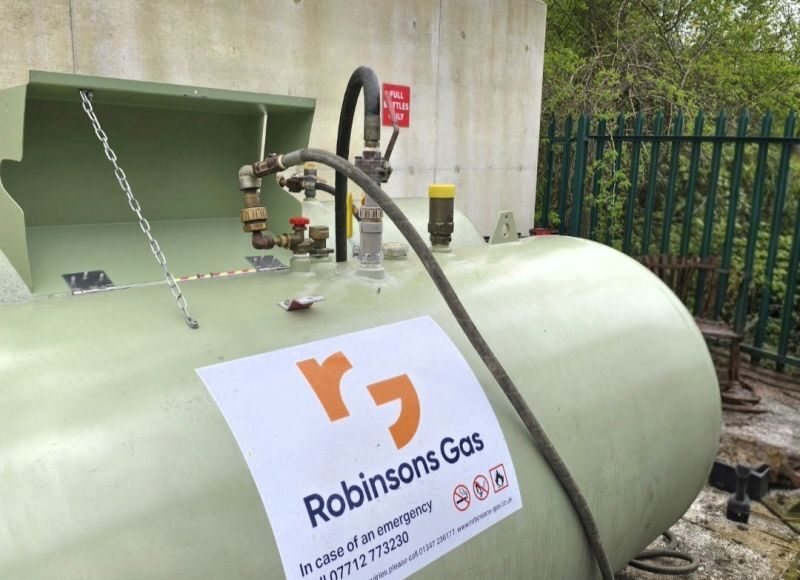
Bulk LPG storage tanks are often tucked away on-site or in gardens, quietly getting on with doing their job day in, day out, whether that’s heating a farmhouse, powering a busy hospitality kitchen, or supporting essential operations on an agricultural site.
Behind that simplicity, however, sits a carefully engineered system designed with multiple layers of protection, ensuring that safety is never left to chance.
Rather than relying on a single safeguard, bulk LPG systems are built like an ongoing conversation between multiple safety mechanisms, each one effectively asking, ‘Is everything still operating exactly as it should?’ and then checking again, just to be certain. It’s this continuous, layered approach that delivers the reliability and peace of mind that domestic, commercial, and agricultural customers depend on.
At Robinsons Gas, safety isn’t an add-on or an afterthought. It’s embedded into every stage of the process, from initial system design and professional installation through to ongoing monitoring, inspection, and long-term maintenance.
In this blog we’ll take a look at the some of the key engineering and safety systems that keep everything running smoothly and reliably behind the scenes.
How a bulk LPG system works behind the scenes
To understand how safety is built in, it helps to first understand what a bulk LPG tank is doing in the background.
At its simplest, LPG is stored in sealed, heavy-duty pressure vessels made from reinforced steel and supplied to appliances as and when it’s needed. Bulk LPG storage tanks come in a range of sizes, with the option of either above-ground or underground tanks,
depending on site requirements and space available.
These tanks are manufactured and tested to strict pressure vessel standards and are designed to withstand internal pressure and mechanical stress over long periods of use. Exterior surfaces are coated with specialist anti-corrosion paint to help withstand the elements, and tanks should only ever be repainted or maintained by qualified professionals.
But behind that straightforward concept sits a carefully controlled balance of pressure, temperature, and flow, managed through purpose-built components that are constantly working to keep conditions stable and predictable.
Even when demand changes suddenly, or weather conditions shift dramatically on exposed rural sites, the system is designed to respond automatically and maintain equilibrium without interruption. This controlled, engineered environment forms the foundation for every safety feature layered on top.
Safety valves and fittings
Safety in bulk LPG systems doesn’t rely on a single feature, it’s a combination of multiple engineered safeguards, all working together.
Tanks are fitted with specialised valves and gauges that play a vital role in keeping the system safe, controlled, and easy to monitor. These components are designed and manufactured to meet strict industry standards, including BS EN 13175 for valves and fittings, and BS EN 13799 for content gauges, as well as the requirements of the Pressure Equipment (Safety) regulations 2016.
To ensure safe operation at all times, it’s essential that all valves and gauges remain visible, fully accessible, and free from any obstructions, whether on a domestic installation or a busy industrial site.
Regulators and pressure control
At Robinsons Gas, we see the regulator as one of the quiet heroes of a bulk LPG system. It’s absolutely essential in keeping everything operating safely and smoothly.
The regulator is typically located beneath the tank lid or at the point where the LPG enters the property. Its job is straightforward but vital: it reduces LPG stored at high pressure in the LPG tank down to a safe, consistent operating pressure suitable for boilers, heating systems, and other appliances inside the home or business.
Without this controlled reduction, appliances simply wouldn’t function safely or efficiently. The regulator ensures the system remains balanced, stable, and protected at all times.
Inside the regulator are two key safety mechanisms designed to act automatically if pressure moves outside safe limits.
- UPSO (Under pressure shut off). If the system pressure drops too low, the UPSO activates and shuts off the gas supply. This helps prevent issues such as leaks, blockages or problems caused by an interrupted or empty supply.
- OPSO (Over Pressure Shut Off). If the pressure rises above a safe operating level, the OPSO will immediately shut down the gas supply to protect the system from overpressure risks. An OPSO should only ever be reset by a qualified Gas Safe engineer, as while a lockout can be due to something minor, it can also be an indication there’s a serious problem.
Together, these safeguards ensure the regulator doesn’t just control pressure, but actively protects the entire system, maintaining safety and reliability around the clock.
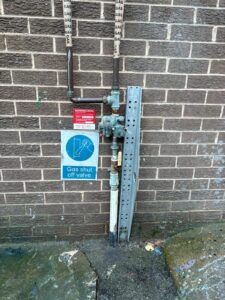
Emergency control valve (ECV)
The Emergency Control Valve (ECV) is a key safety feature that gives you immediate control over your gas supply in the unlikely event of an escape.
It is typically located at the point where the gas supply enters the property or premises, sometimes within a meter box, and it should be clearly marked so it can be easily identified when needed.
In an emergency, the ECV allows the gas supply to be shut off quickly and safely. If you ever need to use it, the first step is to turn off all gas appliances and extinguish any pilot lights, helping to prevent gas from continuing to flow through the system.
To isolate the supply, turn the ECV handle through 90 degrees clockwise into the ‘off’ position. When correctly shut off, the handle will sit across the pipe rather than in line with it, providing a clear visual indication that the gas supply has been isolated.
Isolation valves
Working alongside the ECV, isolation valves, also known as shut-off valves, provide an additional layer of control within a bulk LPG system. They are usually located on top of the tank under the lid for above-ground tanks, or under the cover at ground level for underground tanks.
While the ECV allows the gas supply into the property, isolation vales are used within the wider system to separate and control specific sections of pipework or equipment. This allows engineers to safely isolate parts of the installation for maintenance, inspection, or emergency response without disrupting the entire system.
This is especially important across sectors where continuity of supply is essential, for instance care homes, manufacturing, or poultry rearing.
In everyday operation, isolation valves remain unobtrusive and reliable, but when needed, they give engineers precise control, helping ensure the system can be managed safely, efficiently, and with minimal disruption.
Pressure Relief valves (PRV)
Each LPG vessel is fitted with a pressure relief valve (PRV) on the top of the tank, a carefully engineered safety device designed to automatically open and safely release excess pressure if it rises beyond safe operating limits.
It’s a critical part of the system’s built-in protection, working quietly in the background until it’s needed most.
This becomes especially important in extreme conditions, such as high ambient temperatures or exposure to fire, where internal pressure can rise rapidly. In these rare situations, the PRV responds immediately, releasing pressure in a controlled and predictable way to protect the structural integrity of the tank, and maintain overall system safety.
If a PRV activates, it is simply doing the job it was designed for, safely managing pressure within the vessel. In this situation, as a Robinsons Gas customer, you should contact us immediately or call the 24/7 emergency line outside of normal hours.
Keep all sources of ignition well away from the tank. If it safe to do so, you may help reduce pressure by gently cooling the tank surface by spraying water onto its surface from a safe distance. Most importantly, always remain clear of the PRV itself, as it may vent gas without warning.
Your safety, our priority
Bulk LPG is an extremely safe and highly controlled energy source when systems are correctly installed, monitored, and maintained. The combination of engineered safeguards, strict standards, and professional oversight makes it a reliable solution across off-grid homes and rural businesses alike.
At Robinsons Gas, as your off-grid experts with our own in-house engineering team, we provide fully managed LPG solutions, ongoing support, and expert guidance to ensure your system remains safe and reliable, while meeting all relevant rules and regutions.
If you have any concerns about your LPG system, need advice, or want to speak to our friendly team about installation, maintenance, or supply, get in touch today on 01347 238177.