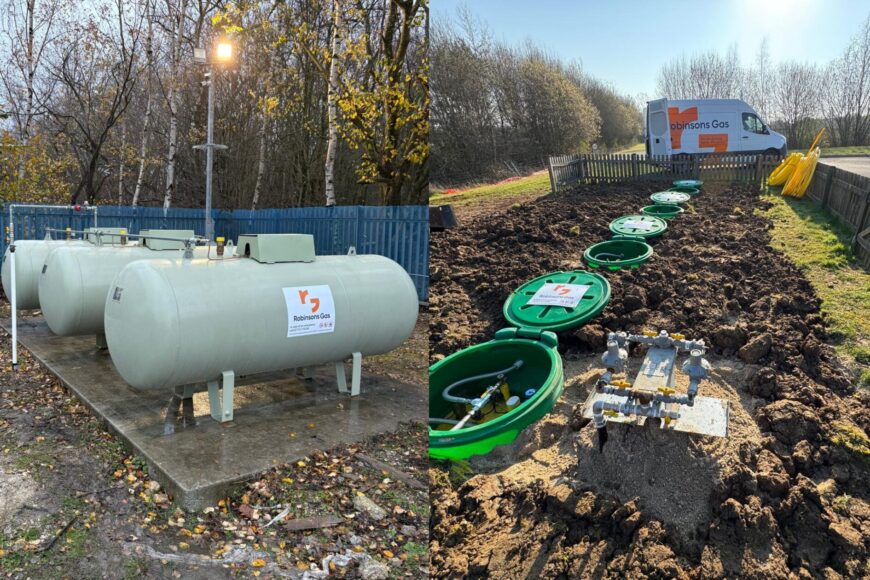
If you’re choosing between an above-ground and underground LPG tank, understanding the differences can help you decide which option is best for your property or business.
If you’re moving to a new LPG supplier, you may also be wondering whether your existing bulk LPG tank is still the best option for your property or premises, particularly if you’re planning changes to the site.
An LPG tank can be installed above ground or underground. Both provide a safe and reliable way to store LPG, but there are some important differences between the two.
Whichever option is used, the installation needs to meet the relevant LPG safety requirements. These cover things such as where the tank can be positioned, the space around it, pipework, and access for routine maintenance and for LPG deliveries. This is why installing an LPG tank isn’t simply a case of finding a suitable-looking spot and putting a tank there.
So, which is right for you?
An above-ground LPG tank is often the simpler and more cost-effective choice where you have enough suitable outdoor space. An underground LPG tank can be a better option if reducing visual impact is a priority, although it requires more excavation and groundworks to install.
The right option will ultimately depend on your property or premises, the space available, your LPG requirements and the practicalities of installing and accessing the tank.
Your LPG supplier should complete a site survey and take all of these factors into account before recommending the most suitable solution for you.
In this blog, we’ll explain the difference between above-ground and underground LPG tanks, what you need to consider, and how your supplier can help you decide what’s right for your property.
What is an above-ground tank?
Above-ground LPG tanks come in a range of sizes and are a popular choice for homes and businesses. They are installed outside your property on a suitable, level concrete base and, unlike underground tanks, remain visible once installed. They must never be installed in an open pit or below ground level.
Although an above-ground tank is clearly visible, there are ways to make it blend more naturally into its surroundings. Screening can sometimes be used to make the tank less noticeable, provided it doesn’t restrict access or compromise the required safety clearances.
The location of your LPG tank is important and is governed by strict installation regulations. It needs to be positioned a safe distance from buildings, boundaries and other potential hazards, with the required separation distances depending on the size and capacity of the tank. Your LPG supplier or installer will be able to advise on the most suitable location for your property and ensure the installation meets all relevant requirements.
For many homes and businesses, an above-ground tank is a practical and straightforward option, particularly where there is enough space around the property to accommodate the tank and the necessary safety distances. They are also easy for delivery drivers to access and provide straightforward access for routine maintenance, inspections and servicing.
In short, if you have the space available, an above-ground tank can be a simple, reliable and cost-effective way to store LPG.
What is an underground LPG tank?
If you’re looking for a more discreet way to store LPG, an underground LPG tank could be a good option. As the name suggests, the tank is installed below ground, leaving only a small access lid visible at ground level. This lid provides access to the tank’s fittings and equipment, while the vessel itself remains safely out of sight.
Like above-ground tanks, underground tanks are available in a range of sizes, so there are options to suit different homes, businesses and LPG requirements. Their robust steel construction also means they’re built to last, with an underground LPG tank typically providing many years of reliable service.
For properties where appearance or available outdoor space is important, an underground tank can be an attractive solution. By keeping the vessel below ground, you can significantly reduce its visual impact and retain a more open-looking garden or outdoor area. It can be particularly useful when you want to make the most of your outdoor area or simply prefer your LPG tank to be less noticeable.
However, an underground tank still needs to be accessible and protected. You must never park vehicles, drive over, or build permanent structures or hard-standing areas directly above a buried LPG tank. Your LPG supplier will be able to advise on the appropriate location and the clearances that need to be maintained.
How are above-ground and underground LPG tanks installed?
The main difference between the two options is the amount of preparation and groundworks involved. An above-ground LPG tank is generally quicker and simpler to install, as the tank sits on a suitable concrete base at ground level. Once the location has been assessed and the required safety clearances confirmed, the base can be prepared and the tank securely positioned.
An underground LPG tank requires more extensive preparation, as the vessel needs to be installed below ground. The proposed location must be carefully assessed before excavation begins, including checking for underground services and considering factors such as the local water table and drainage. A suitable concrete base is installed at the bottom of the excavation, before the tank is positioned and securely anchored with heavy-duty straps to prevent movement.
Once the underground tank is in place, the excavation is carefully backfilled and compacted in layers, leaving only the access lid visible at ground level. This gives you a much more discreet installation, but the additional excavation and groundworks mean the installation process is typically more involved than with an above-ground tank.
Ultimately, there isn’t a one-size-fits-all answer. An above-ground tank may be the straightforward choice, where there is plenty of suitable outdoor space, while an underground tank can be ideal if you want to minimise the tank’s visual impact and make better use of your available space.
Above-ground vs underground: what’s the difference?
| Above-ground LPG tank
|
Underground LPG tank | |
|---|---|---|
| Appearance | Visible on the property
|
Mostly hidden from view |
| Installation | Installed on a concrete base
|
More involved, requiring excavation and additional groundworks |
| Install Costs | Generally lower due to simpler installation
|
Generally higher due to excavation and additional groundworks |
| Space | Requires safety clearances | Requires space for the tank, excavation and access
|
| Access | Readily visible and accessible
|
Accessed via a ground-level lid and valve chamber |
| Key considerations | Suitable ground, safety clearances and access for deliveries
|
All of the above, plus excavation, drainage, underground services and ground conditions |
Neither option is automatically better than the other. It comes down to what works best for your property or premises, your LPG requirements, and the practicalities of the installation.
Does an underground tank cost more to install?
In most cases, yes. The installation of underground LPG tanks is more involved than installing an above-ground tank as it requires excavation, additional groundworks and there are drainage considerations. However, many property owners feel the reduced visual impact makes an underground installation worthwhile.
Is an underground LPG tank safer than an above-ground tank?
Both above-ground and underground LPG tanks can provide a safe way to store LPG when they are correctly installed, maintained and used.
The important thing isn’t simply whether a tank is above or below ground. The installation needs to meet the relevant requirements, and the tank needs to be properly maintained and inspected.
This is why the installation should always be assessed and carried out by suitably qualified LPG professionals. They’ll consider the site, safety requirements and practicalities of the installation before recommending the most suitable option.
Which type of LPG tank is right for my property?
There isn’t one answer that applies to every property.
Your LPG supplier will look at a number of factors, including:
- The size and layout of your property or premises
- Available space
- Access for LPG deliveries
- The location of buildings, boundaries and other features
- The suitability of the ground for installation
- Your LPG requirements
- Relevant installation and safety requirements
From there, they can recommend the most appropriate tank and installation.
If you’re new to LPG, our guide to getting to know your LPG tank and installation explains the key components of a bulk LPG installation and what to expect once your tank is installed.
How much space do I need for an LPG tank?
The amount of space you need will depend on the size of the LPG tank and the layout of your property or premises. LPG tanks must be positioned with the required safety distances from buildings, boundaries and other potential hazards, while allowing suitable access for deliveries and maintenance.
Your LPG supplier will assess this as part of a site survey. You can also read our guide to bulk LPG tanks and siting for more information.
Can I change from an above-ground to an underground LPG tank?
In some cases, it may be possible to replace an above-ground LPG tank with an underground tank, but it isn’t simply a case of putting your existing tank underground.
The proposed location would need to be assessed to make sure it is suitable for an underground installation. This includes considering available space, safety clearances, underground services, ground conditions, drainage and access for LPG deliveries and maintenance.
The existing tank would also need to be removed, and the new underground tank installed in accordance with the relevant requirements.
If you’re considering changing the type or location of your LPG tank, speak to your LPG supplier first. They can assess your property and explain what options are available.
Considering a new LPG tank or changing your existing installation?
Whether you’re a homeowner looking for a discreet LPG solution or a business reviewing its energy requirements, our team can help you understand your options. All of our experienced in-house engineers are Gas Safe qualified and will ensure your tank is installed or relocated safely and professionally.
From farms and agricultural businesses to hospitality, holiday parks and commercial premises, we’ll assess your site and recommend a tank solution based on your LPG requirements, available space and the practicalities of installation.
Get in touch with Robinsons Gas to discuss your requirements and arrange a site assessment.